How do you use a Maxi-Cosi safely in your car?
How do you install a Maxi-Cosi car seat safely? And what age guidelines apply now? We receive these questions every day. That is why we have put together the most important information for you:
What is the safest place to install a car seat?
As a parent, there is only one thing you want when you get into the car: to be sure that your child is as safe as possible. The position of the car seat plays a bigger role in this than many people think.
The safest place for the car seat is in the middle of the back seat. This position is statistically the safest because it is furthest away from both side airbags and possible collisions.
Because the middle position is not always possible (due to the lack of ISOFIX attachment points or a seat belt), the position behind the front passenger is a very good alternative. This is often chosen because you can easily reach your child from the sidewalk. The position behind the driver is also safe, but less ideal because side collisions occur more often on this side.
We always recommend using the back seat. If you do have to use the front passenger seat, it is legally required to deactivate the passenger airbag before you leave.
ISOFIX attachment: For detailed information on correctly installing ISOFIX systems, view our special ISOFIX page
What is the i-Size standard and what does this mean for safety?
The i-Size standard (ECE R129) is the current European standard that replaces the older R44/04 standard. This standard offers important improvements:
- Length instead of weight: Car seats are classified by the child's length instead of weight, which guarantees a more accurate fit. A better fit simply means better protection.
- Mandatory rear-facing travel until 15 months: Research shows that this is the safest position for babies and toddlers. The vulnerable head and neck are optimally supported in the event of a collision.
- Improved side impact protection: All i-Size seats must offer protection in side collisions. A crucial extra certainty in the event of an unexpected impact.
- Mandatory ISOFIX attachment: Ensures maximum stability and prevents installation errors. The seat is directly and securely attached to the car. Less risk, more certainty on every trip.
- More extensive crash tests: Tested with advanced dummies and stricter requirements. This looks at how well the head, neck, and torso are protected under realistic conditions.
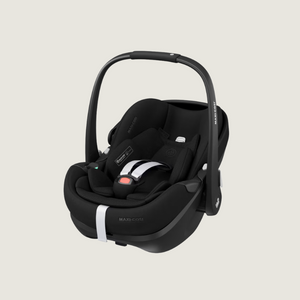
In our assortment you will find fully i-Size certified models such as the innovative Maxi-Cosi Mica with a 360° swivel system for easy getting in and out, and the versatile Pearl which together with the right ISOFIX base offers perfect protection.
Which seat is right for your child?
Length is the leading factor here.
-
40–75 cm: baby car seat
-
60–105 cm: toddler/360° seat
-
100–150 cm: booster seat with backrest
Length (i-Size Category) Car Seat Type Recommended Maxi-Cosi Model 40–75 cm Baby car seat (Always rear-facing) Maxi-Cosi Pebble 360 Pro2 or Pebble Pro i-Size 60–105 cm Toddler/360° Seat (Preferably rear-facing longer) Maxi-Cosi Mica 360 Pro or Pearl 360 Pro 100–150 cm Booster seat with backrest Maxi-Cosi Kore i-Size
Note: The i-Size standard (ECE R129) uses length as the leading criterion for the safety class. This way you are always in the right safety class.
How long can a child sit in a car seat?
Experts advise not to leave babies in a car seat for more than 1.5 to 2 hours continuously. Prolonged limited freedom of movement can be detrimental to motor development. Plan regular breaks during longer trips where your baby is taken out of the seat.
Is a refurbished or second-hand car seat safe?
At Tiny Library, all our car seats undergo a strict safety check with advanced measuring equipment that can detect micro-damage. Our special shock meter records whether a seat has ever undergone a significant impact.
4 Steps for Optimal Safety during Use
1. Check belt tension (The Finger Rule): Make sure the belts are tight enough. You should be able to fit a maximum of 1 to 2 fingers between the belt and your child's body.
2. Remove Winter Clothing: Take off thick jackets and thick sweaters before fastening the child. The straps must fit directly against the child's body to function optimally in the event of a collision.
3. Adjust height setting: Regularly check that the headrest and harness points are at the correct height. The straps should be at or just below the child's shoulder height as they grow.
4. Regular Stability Check: Check before every trip whether the car seat (especially with Isofix or a belt) is stable and does not move more than a few centimeters.